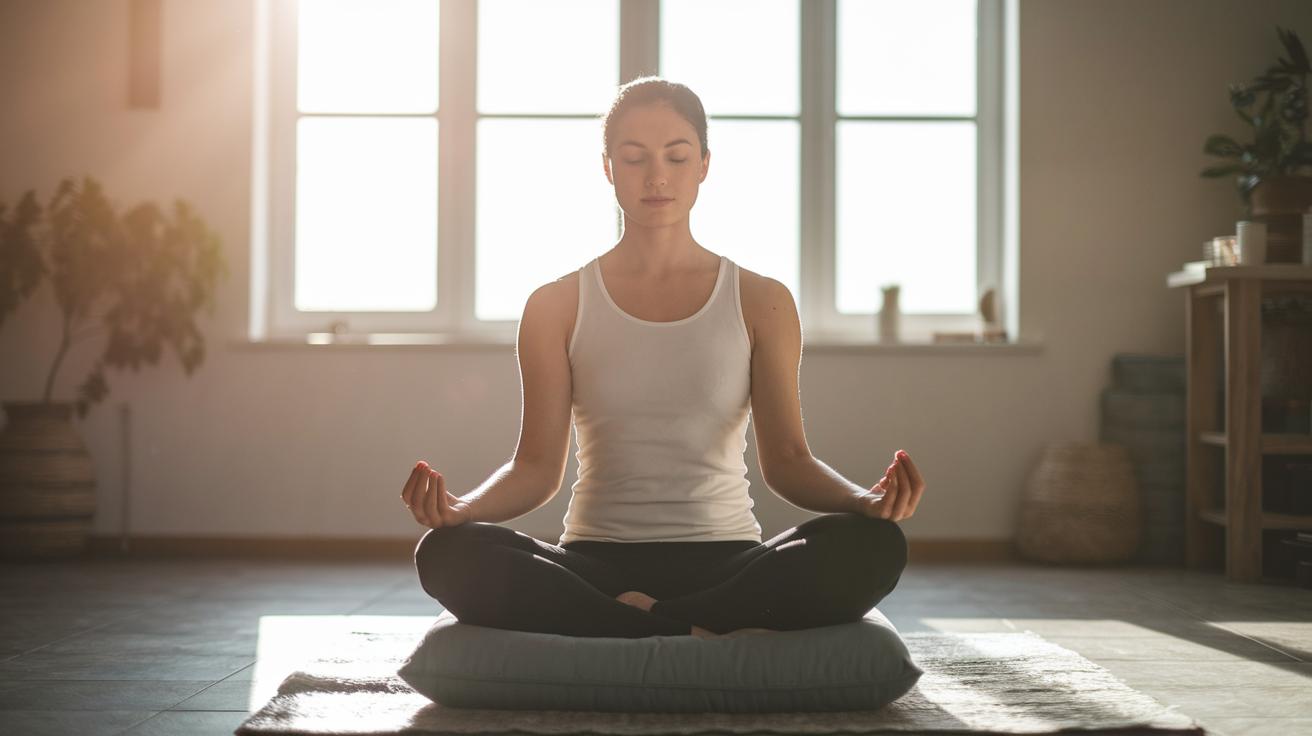
Ever feel like your body is begging for a break? Mindful body scan meditation is a gentle way to reconnect with yourself and melt away built-up stress. Imagine yourself laying on a soft mat while each breath brings calm and helps you notice every little sensation in your body. This practice shows that even small pockets of quiet can clear a busy mind and bring a sense of peaceful relief.
Mindful body scan meditation: Calm Bliss Awaits
Lie down on your back on your yoga or exercise mat. Stretch out your legs and let your arms rest gently by your sides. Feel every part of your body connecting with the mat as you settle in for a calm session. Just allow yourself to relax and take a moment to look inward.
Now, take a few quiet breaths to clear your head. Imagine each part of your body softening and letting go of any tension. Breathe steadily, letting each inhale and exhale wash away any stress. Think of this as your special moment of calm, just for you.
- Start at your toes and slowly move your attention upward.
- Notice the way your toes feel where they touch the mat.
- Let your awareness creep up your legs, feeling every little sensation.
- Bring your focus to your lower back and tummy, noticing how they rise and fall with each breath.
- Then, relax your chest and shoulders, feeling them soften as you breathe out.
- Now, let your arms and hands relax, tuning into their delicate sensations.
- Finally, focus on your neck and head, letting any tension simply drift away.
If you’re short on time, try a quick 5- or 10-minute version by setting a gentle timer. If you have more time, a 30- to 40-minute session can really deepen your calm. You can also use a cozy blanket or a supportive cushion to make yourself even more comfortable while you meditate.
How Mindful Body Scan Meditation Works

Imagine taking a quiet moment to really feel each part of your body. Mindful body scan meditation comes from a technique called Mindfulness-Based Stress Reduction. It guides you to notice everyday sensations, like a gentle tingle or a soft warmth, as you slowly move your focus from one body part to another, much like how Yoga Nidra or progressive muscle relaxation gently relax your muscles.
When you focus on different parts of your body, you let go of built-up stress bit by bit. As you observe each sensation without any judgment, your mind and body start to feel lighter and calmer. Regularly practicing this meditation creates a safe space for regulating your emotions, making everyday tension easier to manage. In truth, this approach turns simple awareness into a powerful tool for easing anxiety and feeling more balanced.
Benefits of Mindful Body Scan Meditation
When you make a habit of mindful body scan meditation, you may feel less stress, sleep better, and enjoy a smoother mood while learning more about yourself. It’s a gentle way to calm your mind, so even when life feels overwhelming, you can take a moment to breathe and settle your thoughts. Research, even studies mentioned by the Mayo Clinic, suggests that this practice can help ease issues like depression, asthma, and sleepless nights.
| Benefit | Supporting Evidence |
|---|---|
| Stress Relief | Deep relaxation techniques in meditation help lower stress levels |
| Sleep Enhancement | Regular practice is linked to better sleep and fewer insomnia symptoms |
| Anxiety Reduction | Meditation helps manage anxiety and improves emotional control |
| Chronic Symptom Management | Guided sessions can ease symptoms of conditions like depression and asthma |
Over time, you might notice that your focus sharpens and a peaceful inner calm builds up with regular practice. Before you know it, meditation becomes your safe haven, a place where you can nurture your well-being and enjoy moments of inner peace in the midst of a busy life.
Mindful Body Scan Meditation Techniques for Beginners

Find a quiet spot where you won’t get disturbed. Whether you choose to lie down on a comfy surface or sit in a relaxed position, make sure your space feels calm. Soft lighting and a little peace and quiet help you focus on the gentle sensations of your body.
Lying vs. Sitting Posture
Lying down lets your body sink into full relaxation on a mat or cushion. You can feel every point of contact, making it easier to notice even the tiniest shifts. Many beginners love this because it makes them feel completely supported.
Sitting up keeps you a bit more alert, which works great if the space is small. It gives you a mix of ease and wakefulness, perfect for shorter sessions or when you want to stay involved. Some find the simplicity of sitting more comfortable and easy to set up.
Using Props Safely
Using a few extras like blankets and cushions can make your session even nicer, especially during longer meditations. These props help take pressure off your joints so you can feel safe and focused. They add a little extra comfort, letting you really tune in to your body.
Selecting Guided and Self-Directed Mindful Body Scan Meditation Resources
A lot of mindful body scan meditation resources come with audio tracks in two lengths, 32 minutes and 20 minutes. These are part of an 8-week MBSR course that gently leads you through each phase of paying attention to your body.
If you're just starting out, you'll find plenty of free mindfulness audio guides, like podcasts and downloadable scripts, so you can jump in without spending a cent. Plus, some paid courses even offer a 25% discount in November, which makes exploring structured sessions easier on your wallet.
At the end of the day, whether you choose instructor-led sessions or self-directed practices really depends on your personal style. If you need step-by-step guidance and extra support, an instructor-led session might be best. But if you’d rather work at your own pace and fit your practice around your busy life, self-directed scripts are the way to go. Give a few sample recordings a listen to find the high-quality guide that helps you feel calm and centered.
Final Words
In the action, we explored practical steps to relax and reconnect with your body. We broke down posture tips, guided instructions, and easy ways to use props for comfort. We shared how each touchpoint brings a sense of calm and helps melt daily stress away.
We also highlighted beginner techniques and trusted resources to support your self-care routines. Keep practicing mindful body scan meditation to feel more centered and confident with every breath and gentle moment of self-attention.
FAQ
What are the 5 steps in body scan meditation?
The 5 steps in body scan meditation mean starting with a comfortable position, moving attention from your toes upward, noticing sensations, gently returning to your breath, and settling fully at the top.
What is the body scan mindfulness technique?
The body scan mindfulness technique means guiding your focus through each body region to observe sensations like warmth or tension, helping you release stress with calm, steady awareness.
What should I expect during body scan meditation?
Body scan meditation means you slowly shift focus through various body parts, notice changes in sensation, and gradually relax your physical and mental state without judgment.
What is the difference between yoga nidra and body scan meditation?
Yoga nidra and body scan meditation differ in focus; yoga nidra induces a sleep-like, deep relaxation, while body scan meditation directs attention to specific sensations to ease day-to-day stress.
How can I choose between different body scan meditation scripts?
Choosing between scripts like 3, 5, or 10 minutes means considering how much time you have and your comfort level, so you select a practice that fits seamlessly into your daily routine.
How can body scan meditation aid sleep?
Body scan meditation for sleep means using gentle, guided attention to ease tension, creating a calm, relaxed state that smoothly transitions you into a more restful and satisfying slumber.
Where can I find body scan mindfulness resources, such as PDFs or YouTube sessions?
Finding body scan mindfulness resources means checking trusted wellness sites and video platforms where you can download PDFs or stream YouTube recordings for guided, accessible practices.