
Ever feel like your thoughts are all tangled up and could use a bit of clearing? Journaling is like a quiet chat with yourself, it helps turn that inner chaos into calm. Picture your journal as a cozy spot where you can let go of your worries and invite little sparks of positivity. In this guide, we’ll walk you through easy, step-by-step ways to start writing your thoughts down, easing tension and lighting up your inner world. Ready to transform everyday pages into moments of comfort and joy? Let’s kick off this refreshing ritual together.
How to Begin Mental Health Journaling: 7 Simple Steps
Journaling can be a warm, personal way to capture your thoughts and feelings, guiding you gently through your emotions. It’s like having a heart-to-heart conversation with yourself. Try these seven simple tips to get started:
- Forget about perfect rules – Let your words flow naturally without stressing over grammar. Imagine writing, “I felt a surge of energy with every word, like my mind was recharging.”
- Leave judgments at the door – Your messy handwriting or quirky style is what makes your journal uniquely yours.
- Pick your favorite tool – Whether you love the feel of a classic notebook, the convenience of a digital app, or even an art journal with doodles and sketches, choose what speaks to you.
- Keep it short – Even just five minutes of writing can clear your mind. It’s like a mini reset button.
- Know your intention – Are you looking to unwind after a busy day, or are you hoping to understand your inner self better? Let your goal guide your writing.
- Set a cozy scene – Find a quiet corner, light a candle, or sip on your favorite tea to create a space that feels right for you.
- Celebrate every moment – Each entry is a mini celebration of your progress. Enjoy the feeling of rewarding your spirit with a little self-care.
Embrace these steps as your friendly roadmap to boost mental well-being. Make journaling a little daily ritual, and watch as your inner strength blossoms over time.
Core Benefits of Journaling for Mental Health

Research shows that focused writing, even just for four days, can boost both your mental and physical well-being. Journaling gives you a private space to let out your thoughts and feelings without any fear of judgment. It’s like gifting your mind an escape from the stress of the day.
When you jot down what you’re feeling, you help ease those racing thoughts and manage anxiety more naturally. It creates a simple outlet for releasing stress, making it easier to stay calm and balanced.
Free-form writing also mixes the tough moments with bits of gratitude. For example, you might write, "After a hectic day, a small happy memory made me smile," and just like that, you lift your mood. This kind of positive journaling can boost your self-awareness and keep mood swings in check.
Keep up with your journaling habit and you’ll soon notice a routine that nurtures a calm and thoughtful mindset every day.
Essential Therapeutic Techniques in Mental Wellness Journaling
Expressive Writing
When you sit down to write, let your feelings flow naturally. Forget about perfect sentences, just jot down what’s in your heart. For example, you might write, "Today, my heart felt heavy, but putting it on paper lifted some of the weight," which can help you get a clearer picture of your emotions.
Positive Affect Journaling
Mix a little gratitude with your tougher moments. Write about what challenges you faced and then list something you’re thankful for. Imagine scribbling, "Despite a stressful day at work, my friend’s smile reminded me that joy still finds a way." It’s a simple trick to help shift your mood toward positivity.
Bullet Journaling for Anxiety
Keep your notes short and simple with bullet points. This way, you can quickly track what made you uneasy and how you calmed those feelings. A line might read, "Morning: felt anxious; Action: deep breathing for 5 minutes," and this little note can help you spot helpful patterns over time.
Stream of Consciousness
Sometimes, just let your thoughts spill out without worrying about editing. Write freely, as if you’re chatting with a friend. You could say, "I let my worries flow onto the page like a gentle cascade, and it felt like a weight was lifted." This kind of uncensored writing can really ease built-up stress.
Mindfulness Journaling
Blend your writing with a moment of calm awareness. Pay attention to little sensations like the cool air on your skin or the steady beat of your heart. For instance, "My slow breaths and the rhythm of my thoughts brought me back to the now," can help ground you right when you need it.
Mental Health Journal Prompts and Examples for Daily Self-Reflection

Journaling is a warm, heartfelt way to connect with your inner self. When you spend just a few minutes every day writing your thoughts down, you create a gentle space for growth and clarity. Here are ten friendly prompts to help you check in with yourself:
-
What am I feeling right now?
Imagine starting with a simple note: "Before my morning coffee kicked in, I felt a mix of anxious butterflies and excitement. It reminded me that every new day holds fresh possibilities." -
List three wins from today
Picture ending your day with a smile: "I finished a tricky task, shared a kind word with a friend, and cooked a meal that truly lifted my spirit." -
What’s one worry I can let go of?
Write freely: "Releasing that nagging worry feels like letting go of a balloon into an open, blue sky." -
How did my body feel during stress today?
Dive into your senses: "My heart raced like a hummingbird, and my shoulders felt tight, almost as if they were begging for a moment of peace." -
What small act of self-kindness can I do tomorrow?
Plan a gentle treat: "Tomorrow, I'll take a few extra minutes to sip my tea slowly while watching the sunrise." -
What triggers did I notice today?
Reflect on your day: "I noticed that loud noises stirred up a bit of unease, which tells me to seek quieter, calming moments." -
Name one thing I’m grateful for
Let gratitude flow: "I’m thankful for the soft sound of rain tapping on the window, like nature’s own lullaby." -
What’s blocking my calm?
Acknowledge the obstacles: "That persistent thought felt like a shadow, recognizing it is the first step in welcoming light back into my day." -
How can I support myself this week?
Think of a practical step: "I’ll set aside specific moments for self-care, ensuring I nurture my well-being throughout the week." -
What would my future self thank me for?
Envision the rewards: "Taking these small steps today is laying the foundation for a kinder, stronger tomorrow."
These prompts are here to guide you in expressing your feelings and adding a little brightness to your daily reflections.
Tips to Overcome Obstacles in Your Mental Health Journaling Routine
Perfectionism might hold you back sometimes. Remember, your journal doesn't have to look like a masterpiece. Just let your words flow, even if they come out as a quick scribble. For example, writing something like, "Today felt messy, and that's okay," can feel really freeing.
Busy schedules can also interrupt your journaling. Try setting a small, realistic time block, maybe just 2 to 5 minutes. Even a brief note can help clear your mind. You might say to yourself, "I took 5 minutes to jot down my thoughts," and soon you'll see that these little moments really add up.
It’s easy to get stuck re-reading old pages, which may bring back stress. Instead, treat each journaling session like a private escape, not like homework. Try to avoid diving into past entries too often, as it could slow down your progress.
Here are some quick mental wellness journaling tips:
- Embrace your messy writing; your natural voice is what matters.
- Keep your journaling sessions short, just a few minutes is enough.
- View your journal as a safe space where judgment has no place.
- Try not to get lost in old memories by re-reading past notes too frequently.
- Reward yourself after each session, even if it’s just a small treat or a moment to appreciate your effort.
Picture yourself finishing a session by saying, "I did my best today," and feeling really proud. Taking these gentle, practical steps can transform journaling into a comforting habit that truly supports your mental well-being.
Enhancing Your Mental Health Journal with Creative Methods
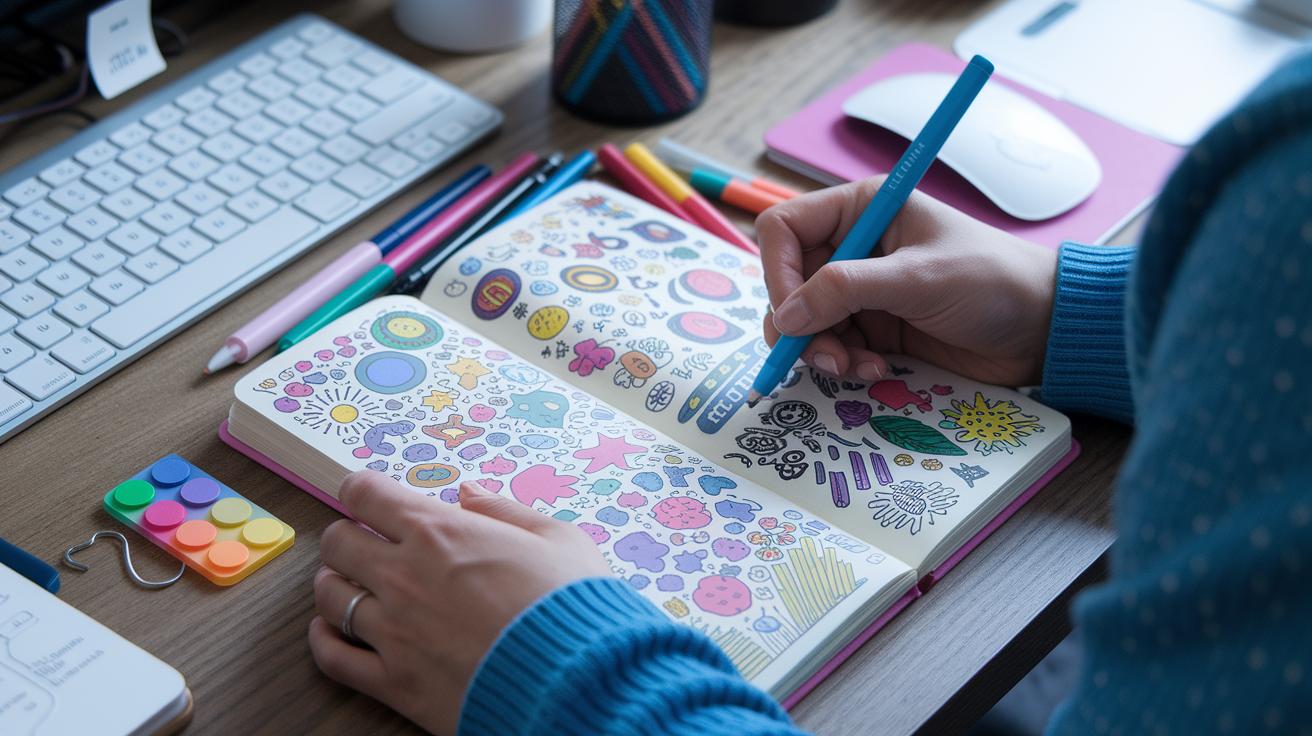
Ever feel like your journal could use a little extra sparkle? Try adding art journaling to your routine. Instead of only writing, why not mix in a few sketches or collages that capture how you feel? For instance, you might doodle a calm beach scene that reminds you of relaxing days.
Another fun idea is to use bullet journaling with color-coded mood trackers. Imagine marking a day in green when you're feeling energetic and blue when you need a soft boost. It turns jotting down your feelings into a vibrant, visual story of your day.
You can also experiment with creative touches like stickers, washi tape (those pretty, delicate tapes), or even some guided drawing exercises. Think about drawing a small timeline of your week or adding a tiny doodle next to a happy thought. These little bursts of creativity can make your journal feel more playful and personal.
So, let your journal be your little creative playground, where music playlists, quick sketches, and visual prompts share the page with your words. This fun approach might just unlock new insights into your emotions while making journaling something you truly enjoy.
Final Words
In the action, this guide took you step by step through starting a mental health journal. We explored simple methods, from expressive writing to creative art entries, offering daily prompts and practical tips to overcome hurdles like time limits and perfectionism. These suggestions show how to journal for mental health by making it a rewarding daily habit. Each idea is meant to spark self-reflection and boost your confidence. Enjoy the process and remember that every entry is a win toward a brighter, more balanced day.
FAQ
How to journal for mental health on Reddit or with PDFs?
The Reddit community and downloadable PDFs offer templates and guidance that help you set up a mental health journal with easy-to-follow prompts and structures to boost self-care.
What do 365 journal prompts for mental health offer?
Those prompts provide daily inspiration and clear cues that guide your reflections, making it easier to track emotions and celebrate small wins every day.
How does journaling for mental health help with anxiety?
Journaling for anxiety involves writing freely about your feelings, recording triggers, and using techniques like bullet journaling to calm racing thoughts and ground your emotions.
How can journaling support mental health for men?
For men, journaling means expressing thoughts in a straightforward, honest way, letting you chart stress, track progress, and build a private tool for personal growth.
How do beginners start journaling for mental health?
Beginners kick off mental health journaling by setting aside a few minutes daily, using simple prompts, and writing without judgment to create a relaxed space for self-expression.
What are the 5 C’s of mental health?
The 5 C’s of mental health typically refer to Confidence, Connection, Control, Competence, and Calm, which together guide a balanced and mindful emotional state.
What is the 3-3-3 journal method?
The 3-3-3 method involves listing three things you’re grateful for, naming three emotions, and setting three intentions, which helps calm the mind and focus your day.
How do you write a journal entry for mental health?
Writing a mental health entry means reflecting on your day and emotions honestly, using prompts or free writing to capture your thoughts without stressing over structure.